Physio & Strength — Abbotsford Ample private parking available at rear Call 03 9939 6625
The MAD InterviewsNo. 02

JasmineGenis

Physiotherapist · M.Physio and M. Health Science (Osteopathy) · MAD Physiotherapy, Abbotsford

“I hope they feel like they’ve been listened to and genuinely cared for.”

In conversation17 questions6 min read
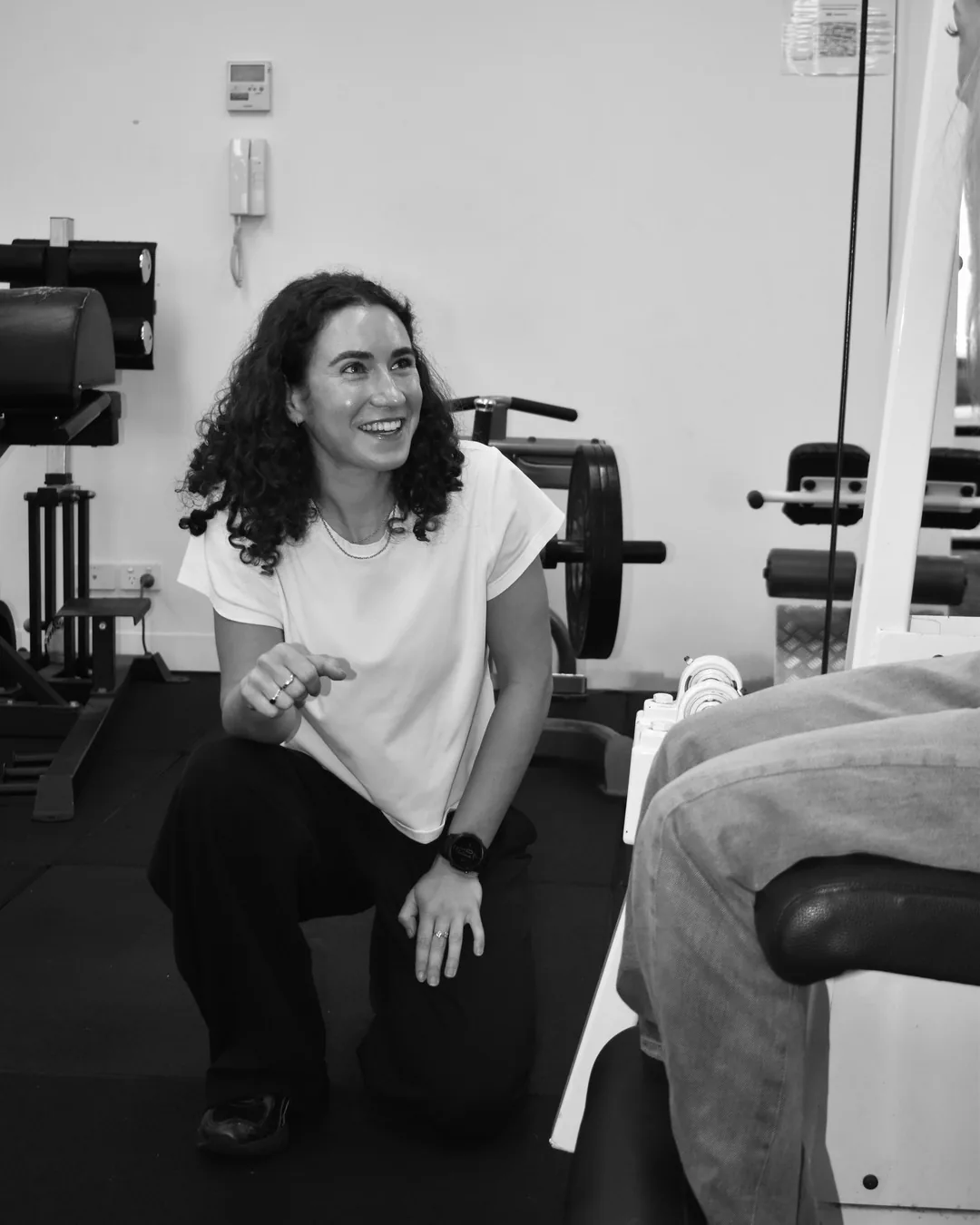
Jasmine Genis crouching and smiling beside a patient in the MAD Physiotherapy gym
I

Growing up

Where did you grow up, and what was sport like for you as a kid?

I was born and raised in Melbourne, and sport was a huge part of my childhood. Basketball was my main sport, but I was always keen to be involved in whatever was going: athletics, swimming and lots of different team sports. I loved any excuse to get out of class and onto a court or field!
Was there a moment you knew you wanted to work with bodies and movement?

It wasn’t so much one moment, more a gradual realisation. Playing so much sport growing up meant I picked up my fair share of injuries (ankles, knees, stress fractures, you name it), which meant I spent a lot of time in physio rooms. When I was a teenager trying to work out what I wanted to do, I knew I loved learning about anatomy and physiology, and I knew I loved sport. Physio felt like the perfect middle ground, a way to combine the science I was interested in with the environment I loved being in.

Who was the first person who made you take this path seriously?

One of my colleagues at North Melbourne, who is also a good friend, was the one who really pushed me to apply for physio. I’d been tossing the idea around for a while, but having someone I respected, who knew how I worked and saw me day to day in that environment, tell me to go for it gave me the confidence to back myself and make the leap.

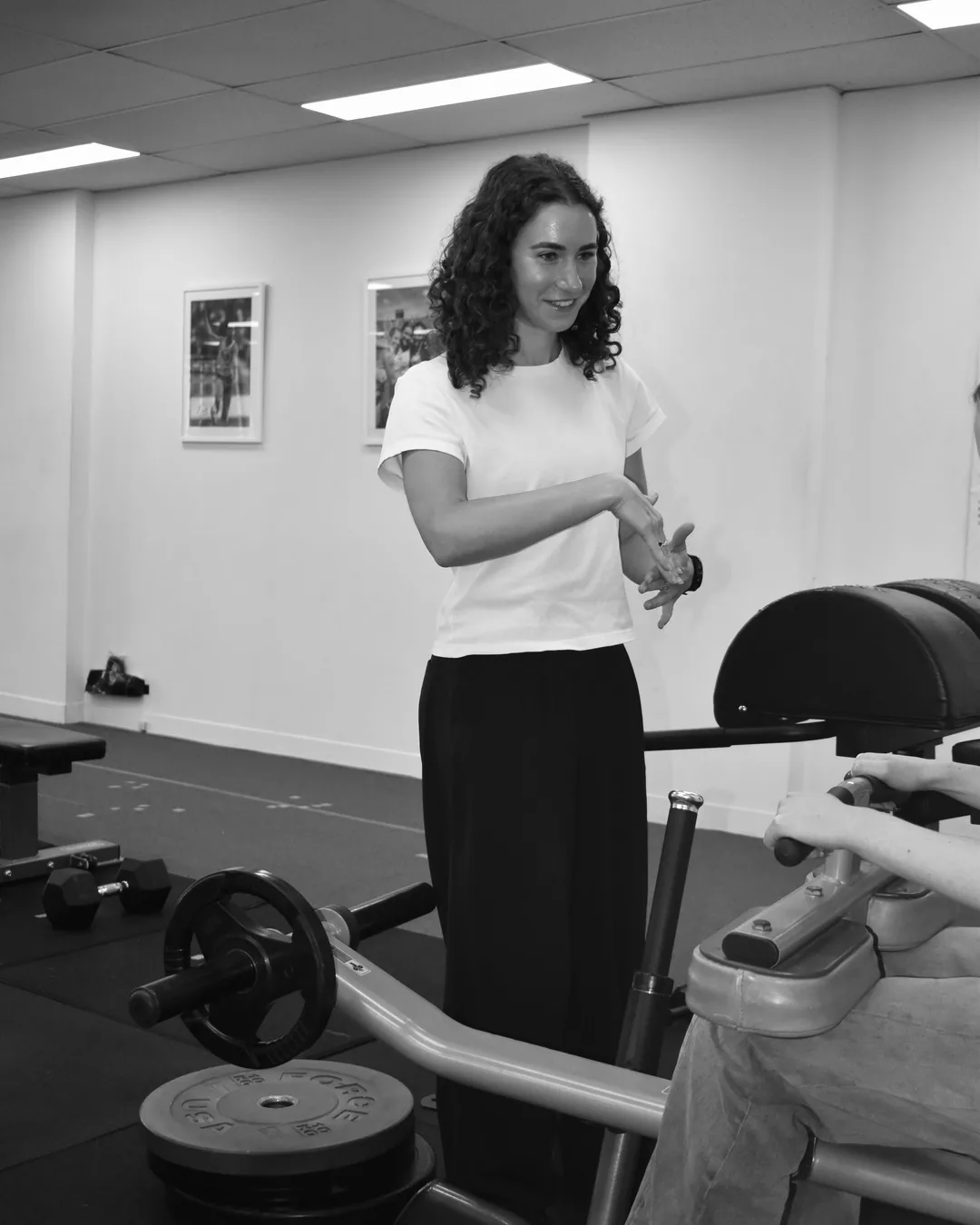
Jasmine Genis standing in the clinic gym, gesturing as she talks with a patient
II

Getting here

Talk me through the road from uni to MAD. What were the detours?

My path wasn’t the most direct! I started out studying Osteopathy at Victoria University, which is a four-and-a-half-year combined undergraduate and master’s degree. After graduating, I worked in football at North Melbourne Football Club as well as in private practice. Those experiences were what really pushed me to go back to uni and complete my Master of Physiotherapy. Working in footy in particular showed me the kind of work I wanted to be doing, and I felt that adding physio to my toolkit would help me get there.

What did your first year as a clinician teach you that uni didn’t?

So much! Uni gives you a really solid foundation, but once you’re out in the real world you quickly learn that nothing is as clean-cut as it is in the textbook. People are complicated: injuries don’t always behave the way you expect, and there’s always the person’s life, goals, work and stress sitting alongside their injury. I was lucky that my time working as an osteo in private practice and in football made the transition into physio a lot smoother, because I could lean on those previous experiences and the clinical reasoning I’d already built up.

Why MAD? What made you stay?

I’ve always loved working with active and sporty people, and the more time I’ve spent in semi-professional and professional sport, the more I’ve realised how much I enjoy the challenge of building high-level rehab plans. I love bringing together the current evidence and the different types of technology and sports science available to make someone’s rehab journey as informed and accurate as possible. MAD gives me the opportunity to use those tools every day and to work with a really motivated, active group of people across a wide range of sports. That combination of variety, challenge and driven clients is what keeps me here.

III

The clinician

How would you describe the way you work to someone who’s never met you?

I like to start by getting a really good understanding of the full picture: what’s happened, what your normal activity levels look like, and what you’re hoping to get back to or achieve. Once we know where you are now and where you want to be, my job is to work out how we bridge that gap. I like to break that journey into clear, achievable steps so you always know what we’re working on and why.

What’s a belief about your craft you’ve changed your mind on?

Loading versus deloading. When you first graduate, it’s easy to think that when someone has a flare-up, the answer is to rest it completely. Now I see deloading very differently. Most of the time I’d rather reduce load than cut it out altogether, so we can keep the tissue, and the person, moving and adapting while symptoms settle. There are definitely situations where complete rest is the right call, but that isn’t always the case.

What part of an appointment do you think people underestimate?

The assessment. I think people often expect it to be quick, and sometimes it is, but other times we really need to dig deeper. That might mean doing more testing, looking at how you move in the gym, or exploring things that don’t seem directly related to your injury at first. A thorough assessment is what helps us find the real gaps, and that’s what makes the rest of the rehab plan effective. Time spent there is never wasted.

What do you notice in the first five minutes with someone new?

How motivated they are to put in the work. Rehab is a partnership, and so much of the outcome depends on what happens between sessions. You can usually get a sense early on of how invested someone is in their recovery, and that helps me work out how best to support them. Some people are raring to go and need help pacing themselves, while others need a bit more structure and encouragement to get started.

What’s the hardest part of the job that nobody sees?

How much of someone’s rehab happens outside the appointment. There’s the planning before each session, building and adjusting rehab programs, and plenty of back-and-forth emails with doctors, surgeons, coaches and the patients themselves. Patients don’t always see that side of it, but it’s a big part of getting someone back to what they love as quickly and safely as we can.

Who or what still shapes how you practise today?

My boss and mentor from my first job out of uni definitely still shapes how I think. They taught me how to really break down the problems people present with, looking closely at the specific tasks someone is trying to get back to and working out what those tasks actually demand of the body. From there, it’s about building those elements into the rehab progressively so that by the time someone returns, they’ve already been exposed to what they need to do. That way of thinking is something I use with every patient.

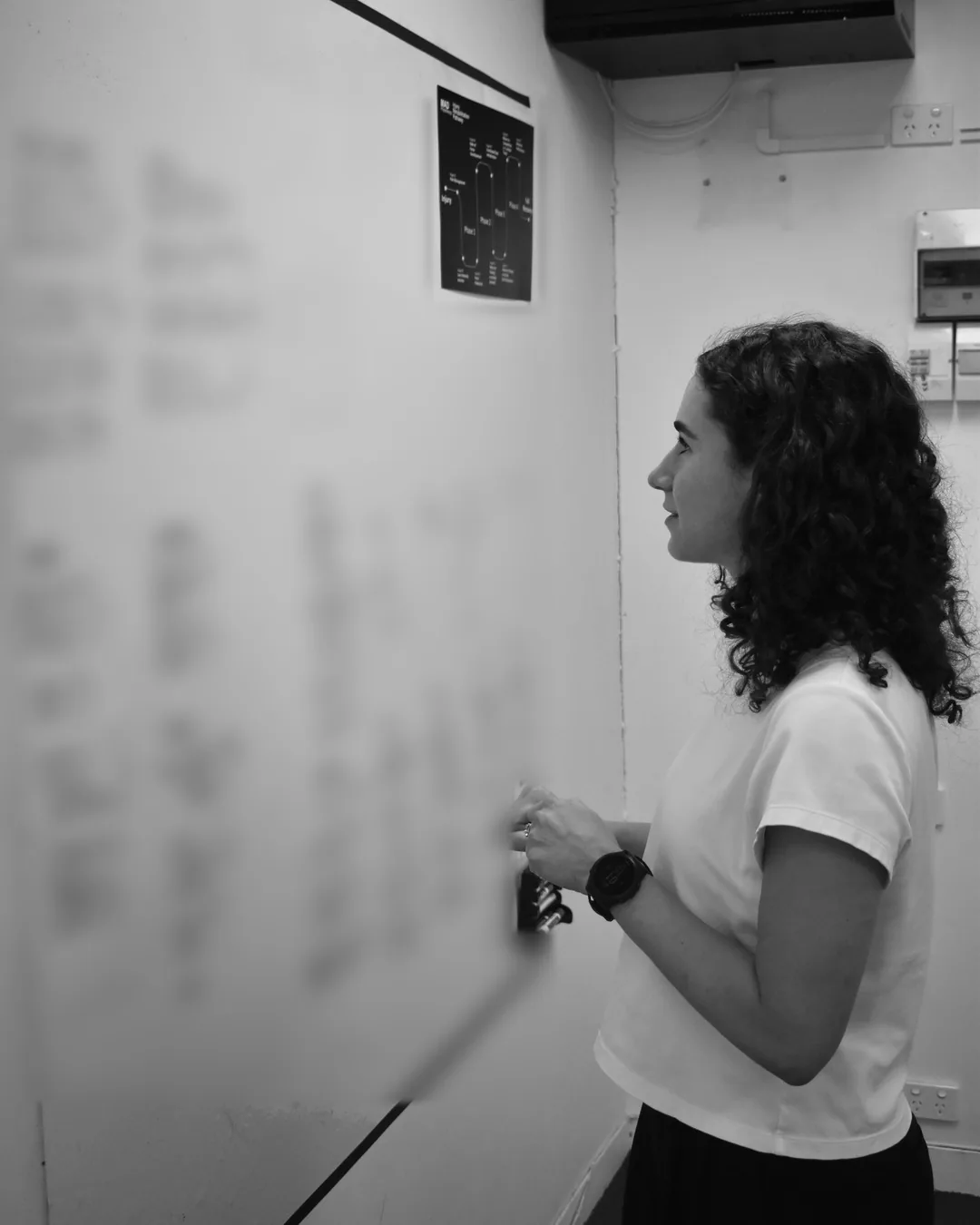
Jasmine Genis at the whiteboard in the MAD Physiotherapy clinic

“I don’t think you ever ‘finish’ learning in this field, and that’s one of the things I love about it.”

Jasmine Genis
IV

The person

What does a normal week look like outside the clinic?

A decent chunk of my week is spent at the footy club, and the rest is all about family and friends. I love going away with friends, trying new restaurants, and really anything that lets me spend quality time with my people.

What do you do when you’re not thinking about work? Or are you always thinking about work?

I’m usually trying to work out what my next adventure will be and how I can squeeze it in between MAD and footy! I love having something to look forward to, and planning my next trip to see new places and visit family and friends around the world is one of my favourite ways to switch off from work.

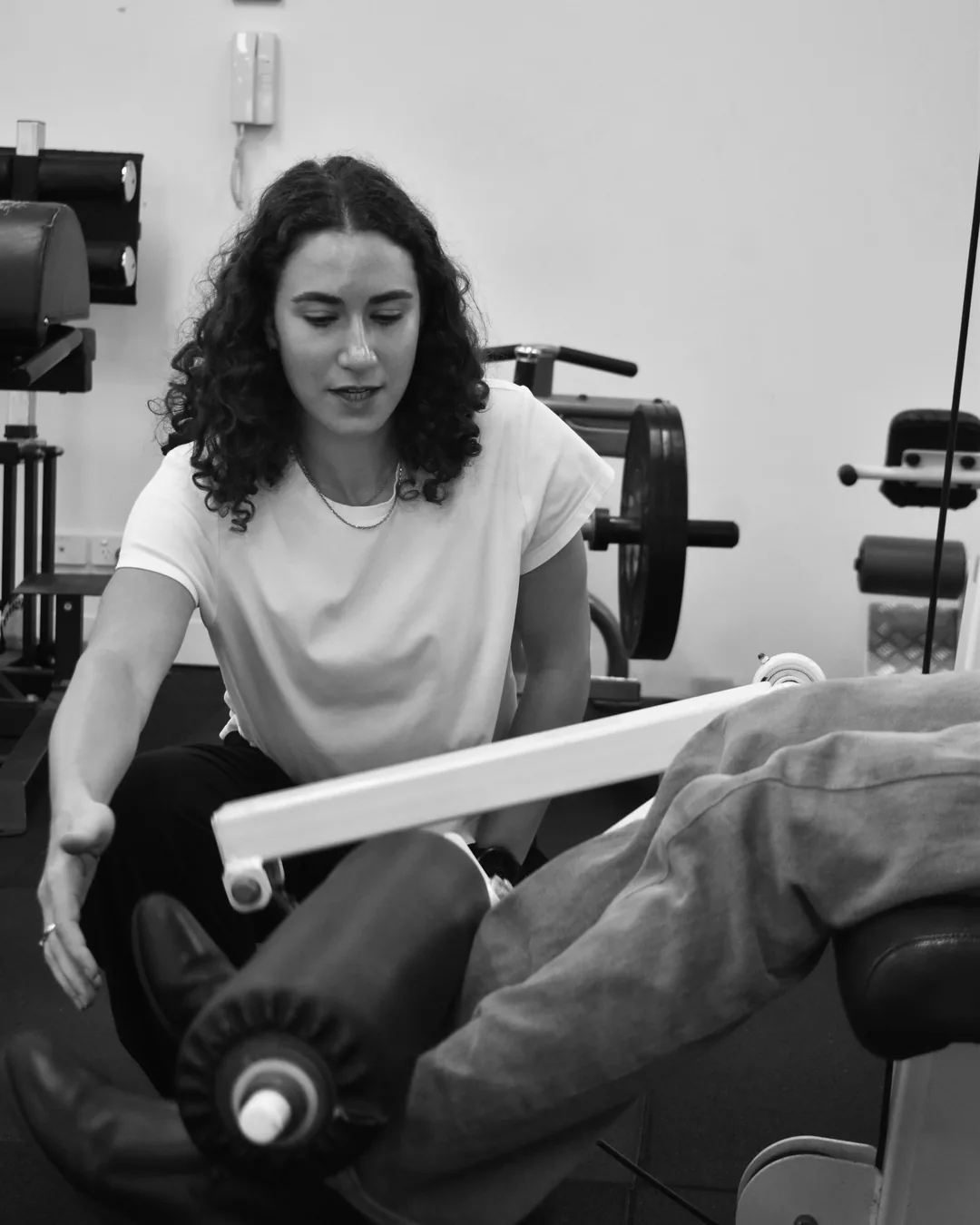
Jasmine Genis working with a patient at a leg curl machine in the clinic gym
V

Looking forward

What are you still trying to get better at?

Lots of things! I’m always trying to grow and evolve, both as a clinician and as a person. Sometimes that means learning something completely new, and other times it means building on what I already know. It can be physical, hands-on skills or more intellectual concepts and ways of thinking. I don’t think you ever “finish” learning in this field, and that’s one of the things I love about it.

What would you tell yourself on your first day?

Take it appointment by appointment and day by day. You can’t know everything all at once, and that’s okay. Use the resources and people around you as much as you can, because you can learn so much from them.

What do you hope people feel when they walk out of your room?

I hope they feel like they’ve been listened to and genuinely cared for. I also want them to leave with a clear understanding of our plan: what we’re working on, what our next step or target is, and how that fits into their bigger journey back to recovery or performance.

Book with Jas

Make an appointment with Jasmine.

Jasmine sees patients at MAD Physiotherapy, 168 Hoddle St, Abbotsford.