
Train in Fascial Manipulation With Australia’s Only Certified Stecco-Method Educator
Melbourne Athletic Development now hosts the full Fascial Manipulation® course pathway on-site, led by our own Head of Education Services, Jack Williams. Build a precise, whole-body framework for tracking down — and treating — the real driver of your patients’ pain, not just where it shows up.
How Does Fascial Manipulation Actually Work?
A quick, plain-English overview for clinicians who want to know what a session actually looks like before enrolling.
Fascia is the connective tissue that surrounds every muscle, bone, nerve and organ, tying the whole body into a single continuous system. Fascial Manipulation® is the manual therapy method built specifically around treating it — originated by Italian physiotherapist Luigi Stecco and continually developed through the research of Professor Carla and Assistant Professor Antonio Stecco.
Most manual therapy training still glosses over fascia entirely. Yet fascia itself generates pain, drives how muscles coordinate and contract, and physically links the body together well beyond the tendon-and-bone model most clinicians learn from. When it loses its ability to glide — what we now know as a densification, often following injury, surgery or repetitive strain — it can tug on structures a long way from where the patient actually feels the problem.
Because fascia links and coordinates the whole body, Fascial Manipulation treats pain as a system-wide problem rather than a local one — the assessment maps the fascial network to find the specific points that have densified, then treats those points directly, wherever they sit relative to the symptom.
It’s less a technique to add to your toolkit and more a different lens on the whole body. Fascia’s structural continuity gives you a way to connect a patient’s current symptoms to their history — old injuries, past surgeries, long-standing movement patterns. Joining those dots is the clinical skill this method actually trains.
In practice: assess movement and history, locate the points driving the dysfunction, then apply focused manual pressure to resolve the restriction rather than just easing the symptom temporarily. It’s a structured, repeatable process — which is exactly what makes it teachable as a certified method rather than a loose set of techniques.
A quick glossary
- Fascia
- The body-wide connective tissue network that surrounds and connects everything inside you.
- Densification
- A localised change in the loose connective tissue of the fascia that reduces its ability to glide — a key target in treatment.
- Centres of Coordination (CC)
- Specific points where muscular force converges. Linked longitudinally, the CCs make up the fascial sequences and planes; the main assessment and treatment points in Level 1.
- Centres of Fusion (CF)
- Points governing diagonal and spiral movements of the body — a reflection of the refined and complex movement of humans; the focus of Level 2.
“Skip fascia and your model of the body has a gap in it — you miss that fascia itself can generate pain, that muscles never act alone, and that so much of what walks into clinic is asking you to look somewhere other than where it hurts.”
The Treatment Framework, Step by Step
Assess
Movement and history are assessed together, building a picture of how past injuries and patterns connect to what’s happening now — well beyond the area that actually hurts.
Locate
Precise palpation pinpoints the densified fascial points behind the dysfunction, turning the assessment into a specific, testable treatment plan.
Treat & Restore
Manual pressure applied directly to those points restores gliding in the fascia, easing pain and returning coordinated, free movement across the whole system — not just the treated area.
Backed by 40+ Years of Fascial Research
A lot of manual therapy still treats fascia as too vague to build a method around. Fascial Manipulation is the exception — grounded in fascial research led globally by Professor Carla Stecco over the past two decades, and refined by Luigi Stecco across more than 40 years of clinical development into one of the better-evidenced methods in the field.
Luigi Stecco
Spent over 40 years in clinical practice building the anatomical and biomechanical model underpinning the method, working directly with patients with musculoskeletal problems throughout.
Prof. Carla Stecco
A globally recognised fascia researcher and the author of the first-ever Functional Atlas of the Human Fascial System.
Asst. Prof. Antonio Stecco
Studies fascial densifications and ultrasound imaging, contributing ongoing clinical research that keeps building the method’s evidence base.
Underpinned by more than 400 peer-reviewed papers from the Stecco research group.
Browse the Research on PubMed →Stop Chasing Symptoms and Start Finding the Source
This training changes how you assess patients — giving you a genuinely global view of the body and a precise, evidence-informed way to trace pain and dysfunction back to where it actually starts.
Internationally Recognised
Certification comes directly through the Fascial Manipulation Institute — the same curriculum recognised worldwide.
Built Around Practical Time
Every level pairs theory with in-person practical days, so you leave able to actually palpate, assess and treat — not just recite the theory.
Kept Deliberately Small
Group sizes stay small on purpose, so you get real supervised practice time and the technique actually sticks.
Grounded in Research
Every level draws on the fascial research of Professor Carla and Assistant Professor Antonio Stecco, giving the method one of the stronger evidence bases in manual therapy.
Feedback From Past Course Participants
I recently completed Level 2 with Jack Williams in Melbourne. The 15 hours of pre-course webinars delivered by Carla and Antonio Stecco themselves were worth “the price of admission alone”. Jack is adept, confident and approachable, with a profound understanding of the material. Fascial Manipulation has added another dimension to my clinical skill-set — I’m already looking forward to Levels 3 and 4.
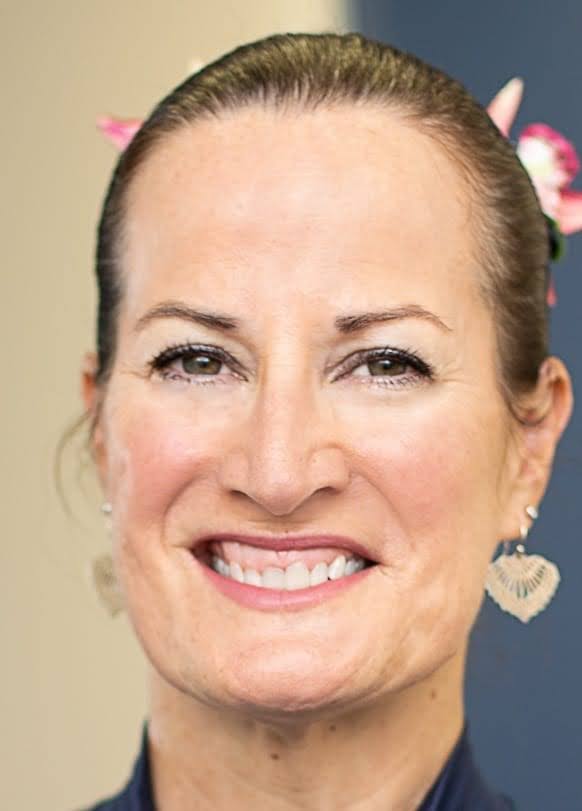 Alison SlaterPhysiotherapist
The Fascial Manipulation Level 1 course was exceptionally well-structured and provided a strong foundation in assessing and treating the myofascial system, with a particular focus on the deep fascia. The skills I gained have been highly applicable in a sports and musculoskeletal clinical setting, deepening my understanding of how the fascial system relates to both acute and chronic presentations. I would highly recommend it to practitioners wanting to advance their clinical skills and understand how previous injuries influence the body’s coordination and function.
 Victor LiPhysiotherapist
I’ve completed Level 1, am close to finishing Level 2, and plan to continue to Levels 3 and 4. Of all the fascial approaches I’ve trained in, this is the one that’s most reshaped how I work — it’s far more systematic and precise than what I’d learned previously. Jack is an exceptional instructor, with clear teaching and post-course catch-ups between modules. I strongly recommend it to any manual therapist wanting a more precise, effective and holistic practice.
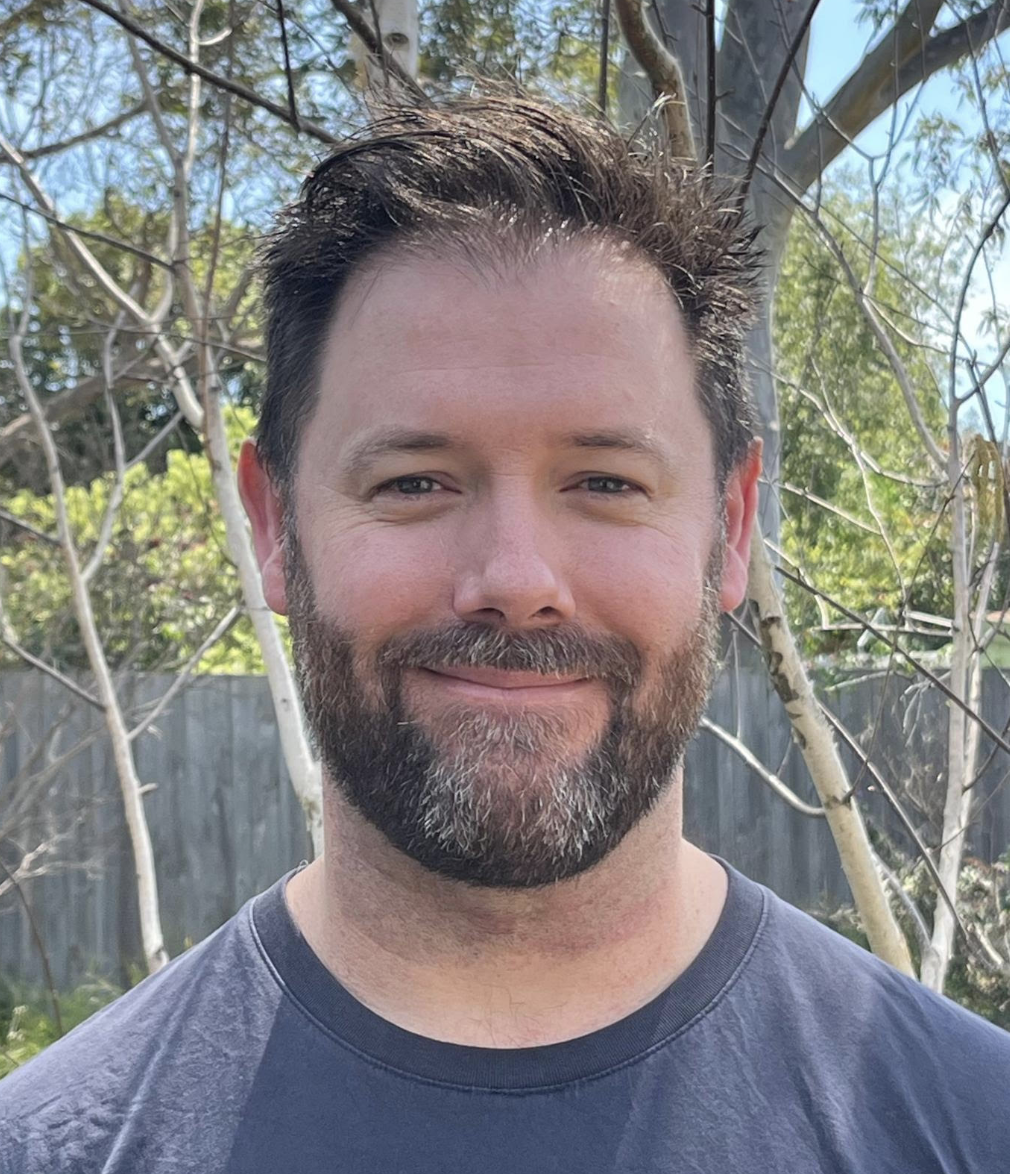 Simon RobinsonOsteopath
Who This Training Is Built For
Eligibility
This training is aimed at qualified manual therapists ready to add a precise, whole-body assessment method to their practice:
*Qualification for remedial massage therapists is dependent on years experience and training background.
We also welcome final-year physiotherapy, osteopathy and chiropractic students.
By the end, you’ll be able to
- Palpate and map the fascial system with confidence and precision
- Explain fascia’s role in pain, motor control and movement to patients and colleagues
- Fold fascial assessment into your regular clinical workflow
- Locate Centres of Coordination and Centres of Fusion, and palpate a densification directly
- Build clear, testable treatment hypotheses from your assessment findings
Your Path to Certification
No prior fascia experience needed to start Level 1 — here’s how the four levels build on each other.
Centres of Coordination & the myofascial sequences.
Centres of Fusion — diagonals & spirals of complex movement.
Internal fascia — organ-fascial units & global biomechanics.
Superficial & systemic fascia — external & internal systems.
Sit the examination to become a Certified Fascial Manipulation Practitioner.
The order matters. Levels 3 and 4 rely on the palpation and assessment skills built in Levels 1 and 2, so they can’t be skipped even if internal dysfunction is your main clinical interest — every practitioner starts at Level 1.
Taught by Jack Williams
Jack is Melbourne Athletic Development’s Director and Head of Education Services, and Australia’s only certified Fascial Manipulation educator.
- Qualifications
- Bachelor of Physiotherapy, Master of Exercise Science, three-year yoga apprenticeship. Certified Fascial Manipulation practitioner and teacher via the Fascial Manipulation Institute.
- Clinical Approach
- Specialises in tracing how prior injuries, surgical history and long-standing movement patterns feed into current pain, tying anatomy, biomechanics and function together into one clinical framework.
- Teaching
- Runs all Fascial Manipulation courses and workshops in-house at MAD, and presents at professional bodies across Australia.
Upcoming Course Dates
Group sizes are capped, so places go quickly — enquire early to secure a spot.
Introductory Workshop
Course format
- Online lectures on fascia anatomy, physiology, pain & dysfunction, plus a hands-on practical covering palpation, densifications & treatment
A good option if you want to test the method before committing to Level 1 — though most clinicians enrol straight into Level 1. Interstate dates also run in Perth, Canberra, Hobart & Adelaide.
See Workshop Details →Level 1
Course content
- The foundations: fascia’s function, anatomy & biomechanics
- Centres of Coordination (CCs) & the Myofascial Sequences
- How CCs direct the mono- and bi-articular motor units that work in synergy for one direction of movement
- Assessing globally to locate locomotor-system dysfunction at its source
- Hybrid format: online theory lectures + 3 days practical on-site
Unlocks Level 2 on completion. Currently taking intakes in Melbourne and Sydney.
See Level 1 Details →Level 2
What you’ll cover
- Fascia’s role in proprioception and more complex, multi-directional movement
- Centres of Fusion (CFs) — where forces of multiple myofascial units converge
- Anatomy & function of the fascial retinacula; myofascial diagonals & spirals
- Treating symptoms in complex motion or at rest, plus proprioceptive deficits
- Hybrid format: online theory lectures + 3 days practical on-site
Requires Level 1 first, and unlocks Level 3 on completion.
See Level 2 Details →Learn about the Visceral and Superficial Fasciae
Levels 3 and 4 extend the method to the internal and superficial fascial systems. Each builds on the one before, so the prior level must be completed first.
Level 3
What you’ll cover
- Treating musculoskeletal & internal problems together in complex patients with visceral-somatic or somato-visceral compensations
- Internal fascia: organ-fascial units & apparatus sequences (catenaries)
- Microscopic & macroscopic autonomic ganglia; palpatory verification of tensostructures
- Restoring the three-dimensional biomechanics of the trunk & limbs
- Daily practical, clinical demonstrations & treatments by instructors
Level 2 completion is required before enrolling.
Ask About Level 3 →Level 4
What you’ll cover
- External (superficial fascia) & internal (paravertebral & prevertebral ganglia) systemic dysfunctions
- Inspecting the quadrants of the superficial fascia with varied manual skills
- Locating changes in dermatomes, adipotomes & lymphatomes of the external systems
- Assessing how internal systems — thermoregulatory, metabolic and immune — contribute to fascial dysfunction
- Daily practical, clinical demonstrations & treatments by instructors
Level 3 completion is required before enrolling.
Ask About Level 4 →Melbourne-based sessions run on-site at 168 Hoddle Street, Abbotsford, Victoria — our own clinic. See the booking links above for addresses of any courses or workshops held outside Melbourne.
Frequently Asked Questions
Where do the courses actually run?
The in-person practical days are held on-site at MAD, 168 Hoddle Street, Abbotsford, with select workshops also run interstate. Check the dates above, or reach out if you need details for a location outside Melbourne.
What happens across a typical course?
Theory is delivered first as online lectures, followed by in-person practical days focused on palpation, assessment and treatment technique. We keep numbers low so everyone gets real supervised practice time, and most levels wrap up with a revision workshop.
Can I start at Level 2 or skip ahead?
No — the levels build directly on each other, particularly the palpation skills. Level 1 is the required starting point for everyone, and Levels 3 and 4 assume you already have the Level 1 and 2 foundation, even if internal dysfunction is what you’re really after.
What sets this apart from other fascia-focused techniques?
Most fascial approaches treat broadly or only around the symptom. This method is built on a specific biomechanical model — locating Centres of Coordination and Centres of Fusion that are often nowhere near the pain — underpinned by the Stecco group’s research. It’s a full assessment-and-treatment framework, not general release work.
Is there research behind it, or is it mostly technique?
It’s grounded in detailed anatomical research into the fascial system, with a growing published literature base largely driven by Carla and Antonio Stecco. Course content pairs that research directly with extensive hands-on practice.
How does this compare to massage or dry needling?
Those approaches generally treat at the site of pain. This method uses a structured assessment to trace symptoms back to specific fascial points — which may sit well away from where it actually hurts — and treats those points directly.
Do I need any fascia background to enrol?
No prior fascia training required. You’ll need to already be a qualified manual therapist (or a final-year physiotherapy, osteopathy or chiropractic student) — the Introductory Workshop and Level 1 both start from first principles.
Should I do the Workshop before Level 1?
Only if you want to test the waters first — it’s a one-day overview and not a prerequisite. Level 1 is the full certificate: three practical days plus the Stecco-delivered online lecture series, textbook and revision workshop included.
Ready to Get Started?
Secure your place in our next Fascial Manipulation intake, taught in-house at Melbourne Athletic Development.
See Course Dates →Questions first? Email education@melbourneathleticdevelopment.com.au